Gonet Academy Vacation Students Tour LBS Facilities
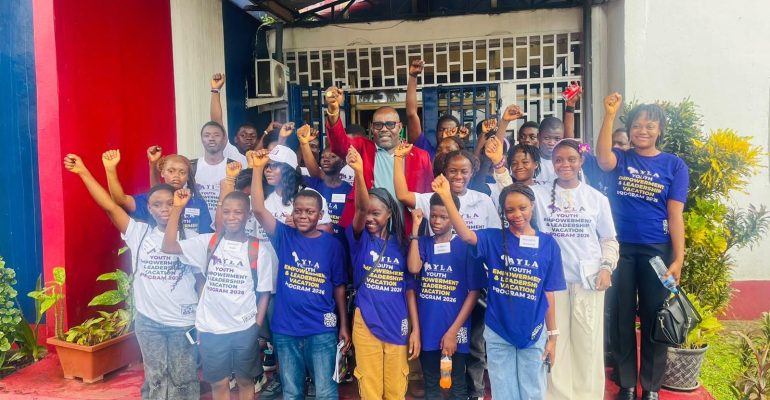

For participants in Gonet Academy’s Youth Leadership and Empowerment Vocational Program, a recent educational excursion to the Liberia Broadcasting System (LBS) offered more than an introduction to radio and broadcasting. It provided a practical lesson in responsibility, public service, communication and the role young Liberians can play in shaping the future of their country.
The visit formed part of Gonet Academy’s broader approach to youth development, which combines classroom instruction with practical exposure to professional institutions. By taking students into real-world environments, the Academy seeks to help them connect leadership principles and personal development lessons with the responsibilities they may eventually assume in their communities and country.
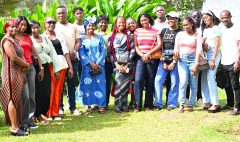
At LBS, the students were introduced to the workings of Liberia’s national broadcasting institution, interacted with senior officials and media professionals, toured broadcasting facilities and engaged in discussions about journalism, radio production, news gathering and newsroom operations.
The experience was particularly significant because it allowed the students to see how communication can extend beyond entertainment or information to become an instrument of public service and national development.
Upon arrival, the students were received by LBS Director General Eugene L. Fahngon, who interacted with the delegation and facilitated a tour of the institution.
Fahngon encouraged the students to take their lessons and mentorship seriously, emphasizing the importance of preparing themselves for the opportunities and responsibilities that lie ahead.
His message reflected a central objective of the Gonet Academy youth program: exposing young people to environments where they can observe professional standards, ask questions and begin developing a clearer understanding of their own potential.
The students subsequently visited three radio stations within the broadcasting system, as well as the newsroom. The tour provided a practical view of how information moves from gathering and production to broadcasting.
For young learners who may have previously encountered broadcasting primarily as listeners or viewers, seeing the people and processes behind the programs offered an entirely different perspective.
They were also introduced to department heads and other staff members, giving them an opportunity to interact directly with professionals and learn about different career paths within the media industry.
One of the most significant messages came from Musu Sirleaf, Director of Radio, who spoke to the students about the power and responsibility of radio.
She described journalism as both a demanding and important responsibility to the state and its people.
“Being a journalist is a sacrificial but sacred responsibility to the state and its people,” Sirleaf said, while also urging the students to look beyond financial rewards when considering careers in journalism and public communication, noting that the profession can cultivate a deeper sense of responsibility to society.
“It does not have money, but it brings you popularity and builds within you the sense of duty to your country and the people.”
The message carried relevance beyond journalism for the young students. It introduced the broader idea that professional success should be accompanied by a sense of duty, integrity and responsibility toward other people.
That lesson is particularly important in leadership development. Young people who understand their responsibilities to their communities are better positioned to view leadership not simply as a position of authority, but as an opportunity to serve.
The students also participated in a question-and-answer session, where they asked about broadcasting, journalism, radio production, news gathering, newsroom operations, career opportunities and professional responsibilities.
The interaction gave them an opportunity to practice skills that are central to effective leadership—speaking confidently, listening carefully, asking relevant questions and engaging respectfully with people in positions of responsibility.
Such experiences can be especially valuable for young people because confidence is often developed through practice rather than theory.
A student who stands before a senior professional and confidently asks a question is not simply learning about broadcasting; the student is also developing the communication and interpersonal skills required to participate meaningfully in society.
Why Practical Exposure Matters
The LBS visit illustrates an important principle underlying Gonet Academy’s youth empowerment model: education should extend beyond the classroom.
Classroom-based instruction can provide concepts, principles and foundational knowledge. Practical exposure, however, allows learners to see how those concepts operate in real institutions.
For participants in the Youth Leadership and Empowerment Vocational Program, the excursion provided exposure to workplace culture, professional conduct, teamwork, institutional responsibility and career possibilities.
It also demonstrated that leadership exists in many forms. A broadcaster, journalist, producer, administrator or department head may contribute to national development through the responsibilities attached to their respective roles.
This understanding can help young people begin to see their future careers not only as sources of employment, but also as platforms through which they can contribute to Liberia.
The deeper value of the excursion therefore extends beyond career exploration.
National development depends significantly on its ability to prepare a new generation that understands both its rights and its responsibilities. Young people need opportunities to develop confidence, but they also need to understand that confidence must be accompanied by discipline, integrity, accountability and service.
The conversations at LBS exposed students to professionals whose work directly affects how information reaches the public. In doing so, the experience provided an opportunity to discuss the consequences that come with professional responsibility.
This, for Gonet, is an important dimension of leadership development. The goal is not merely to produce young people who can communicate effectively or pursue successful careers.
The visit also reinforces the value of mentorship and institutional exposure in shaping young people’s aspirations.
When students interact with professionals and see functioning workplaces, career possibilities become more tangible. They can begin to identify their interests; recognize the skills they need to develop and understand the standards expected in professional environments.
This type of exposure can also challenge young people to broaden their ambitions. Its significance ultimately lies in the kind of young people such experiences can help develop.
The objective is not simply to expose students to possible careers. It is to encourage them to understand that whatever profession they eventually choose, they will have responsibilities to their families, communities and country.
The message from the LBS visit was therefore broader than broadcasting. It was about duty, service, communication, confidence and citizenship.
The LBS excursion consequently became more than an educational tour. It was a practical leadership laboratory—giving young Liberians an opportunity to observe, question, learn and imagine themselves as contributors to the country’s future.
For Gonet Academy, that is the essence of taking education beyond the classroom—equipping young people not only for careers, but for responsible citizenship and leadership.