How Gonet Academy Is Shaping Human Capital Revolution


—Gender Minister Gbeme Horace-Kollie says integrity, lifelong learning, and women’s leadership are critical to nation-building, as over 860 professionals graduate from Cohort 14
As Liberia grapples with the challenges of unemployment, skills gaps, technological disruption, and the urgent need for institutional transformation, the graduation of more than 860 professionals from Gonet Academy has highlighted a growing reality—the country’s development ambitions may depend as much on investments in human capital as they do on roads, power plants, and other physical infrastructure.
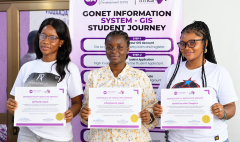
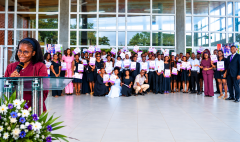
The graduation of 863 learners from Gonet Academy’s 14th Cohort on Saturday, June 27, 2026, was more than a ceremonial celebration of academic achievement. It was a reflection of an emerging movement in the country’s professional development landscape—one that seeks to bridge the longstanding gap between formal education and the practical skills required by a rapidly changing labor market.
Held at the Harvest Intercontinental Cathedral in Congo Town, the ceremony brought together government officials, development partners, educators, employers, and families to celebrate graduates from all fifteen counties of Liberia. Yet beneath the black coat suits, dresses, and certificates lay a broader national story about workforce readiness, gender empowerment, leadership development, and the role of lifelong learning in nation-building.
For decades, one of the country’s development challenges has been the mismatch between academic qualifications and labor market demands. Employers have frequently cited deficiencies in professional communication, leadership, digital literacy, workplace ethics, and critical thinking among job seekers, even as thousands of young people graduate annually from schools and universities.
Institutions such as Gonet Academy have emerged partly in response to that challenge.
Since its establishment, the academy has focused on professional and leadership development, providing practical training designed to enhance employability, workplace performance, entrepreneurship, and institutional effectiveness.
The scale of Cohort 14 illustrates the growing demand for such programs. According to the Founder & Chief Empowerment Officer, Mohammed Kerkulah, 1,012 learners enrolled in the cohort, making it the institution’s second-largest enrollment since its founding, surpassed only by Cohort 12, which enrolled 1,049 learners.
Female participation remained a defining strength of the Academy’s commitment to inclusive education. Women accounted for 601 learners (59.39%), while 411 men (40.61%) enrolled, reaffirming Gonet Academy’s leadership in promoting equitable access to professional learning opportunities.
Enrollment was distributed across the Academy’s three flagship program categories, demonstrating strong demand for both foundational and advanced professional training.
The Foundational Certificate Programs (FCP) enrolled 768 learners (75.89%), continuing to serve as the Academy’s primary entry point for professional development. The Comprehensive Professional Programs (CPP) enrolled 220 learners (21.74%), while 24 learners (2.37%) pursued the Professional Diploma Programs (PDP).
Recognizing the extended duration of the Comprehensive Professional Programs and selected diploma programs, 220 CPP learners and 20 PDP learners will continue their studies into Cohort 15, where they will become eligible for graduation upon successful completion of their respective programs.
The Cohort 14 Graduation Ceremony celebrated the achievements of 863 graduates across Gonet Academy’s professional programs. Of these, 723 graduates (83.78%) completed the Foundation Certificate Programs (FCP), achieving an impressive 93.14% graduation rate from an enrollment of 768 learners. Additionally, 4 graduates completed the Professional Diploma Program in Procurement, Logistics & Supply Chain Management. These graduates enrolled and completed their professional training during Cohort 14.
The ceremony also recognized 126 graduates (14.60%) from the Comprehensive Professional Programs (CPP), representing a 91.97% graduation rate from an enrollment of 137 learners, along with 10 graduates from the Professional Diploma Program in Monitoring & Evaluation. These graduates enrolled in Cohort 13 and completed their extended training during Cohort 14.
Overall, 512 female graduates (59.35%) and 351 male graduates (40.65%) completed their programs, reaffirming Gonet Academy’s commitment to excellence and inclusive professional development.
The academy reported that participants improved from an average baseline knowledge score of 45 percent to 93.1 percent upon completion—an increase of 48.1 percentage points.
“These are not just statistics,” Kerkulah told the audience. “They represent confidence gained, careers strengthened, and lives transformed.”

His observation touches on a broader development issue facing Liberia: the realization that economic growth depends not only on talent, natural resources, and investment but also on the quality of the workforce available to drive productivity and innovation.
Perhaps the most striking aspect of Cohort 14 was the dominance of women among participants and graduates.
Women accounted for 59.4 percent of enrollment and achieved a completion rate of 95.88 percent, significantly higher than the 90.84 percent completion rate recorded by men.
The figures reflect a growing trend across Liberia’s educational and professional sectors, where women are increasingly accessing opportunities once limited by cultural expectations, economic barriers, and social constraints.
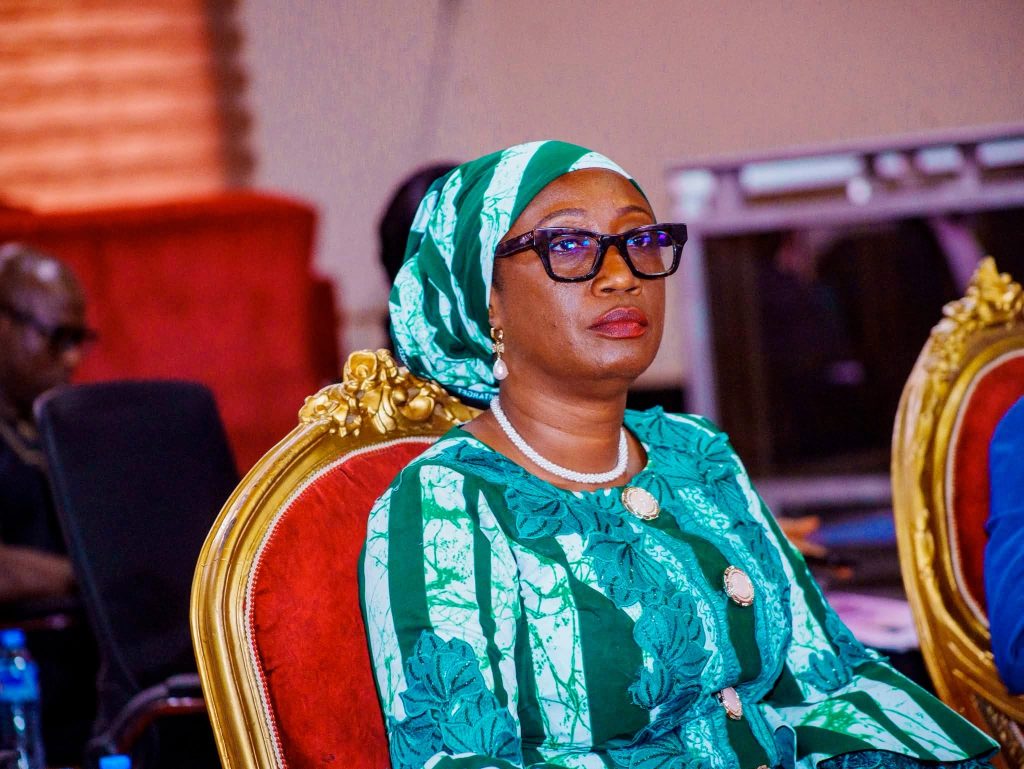
For Gender Minister Gbeme Horace-Kollie, who served as guest speaker, the statistics represented more than enrollment data.
They symbolized a broader shift in Liberia’s social and economic landscape.
“I am deeply grateful for the opportunity and profound honor to share in this historic occasion,” she told graduates. “Today we celebrate a remarkable milestone in the academic and professional journey of more than 860 graduates representing all 15 counties of the Republic of Liberia.”
Throughout her address, the minister repeatedly returned to the theme of women’s empowerment, describing the predominance of female graduates as evidence that more Liberian women are overcoming traditional barriers and asserting themselves in professional spaces.
“As you leave Gonet Academy, know that your aspirations are valid, your voices matter, and your leadership is indispensable,” she said.
Her remarks align closely with Liberia’s broader efforts to promote gender inclusion in governance, business, education, and public service.
Development economists have long argued that expanding women’s participation in education and the workforce produces significant social and economic benefits.
Studies consistently show that educated and economically empowered women are more likely to invest in children’s education, improve household wellbeing, contribute to community development, and participate in decision-making processes.
In Liberia, where women have historically played central roles in peacebuilding, commerce, agriculture, and community leadership, increasing access to professional development programs has become an important component of national development strategies.
The strong female participation at Gonet Academy suggests that women are increasingly recognizing professional education as a pathway to leadership and economic mobility.
The academy’s ability to attract and retain female learners from across all fifteen counties may therefore represent one of its most important contributions to national development.
The Minister’s Nation-Building Message
While the ceremony celebrated educational achievement, Minister Horace-Kollie’s speech was ultimately a call for ethical leadership.
Her central argument was that technical skills alone are insufficient to transform a nation.
Rather, sustainable development depends on integrity, accountability, and a commitment to public service.
“Your qualifications may open the door, but your integrity determines how long that door remains open,” she told graduates.
The statement reflects a growing recognition among policymakers that Liberia’s development challenges are not solely technical or economic. Many are governance challenges requiring ethical leadership and institutional trust.
The minister’s emphasis on integrity is particularly significant given Liberia’s continuing efforts to strengthen public institutions, improve accountability, combat corruption, and build public confidence in governance.
Her message suggested that nation-building requires more than educated citizens; it requires principled citizens willing to apply their knowledge responsibly.
“Graduation is not the destination. It is the commencement of a lifelong journey of learning, growth, and service,” she added.
In essence, her remarks framed education not merely as a personal achievement but as a public responsibility.
Another key theme emerging from the graduation was the need to prepare Liberians for global economic transformations.
Kerkulah highlighted the impact of artificial intelligence, automation, climate change, and globalization on labor markets.
“The question is no longer whether change is coming because change has already come,” he said. “The question is whether we are prepared.”
His observation speaks to a challenge facing many developing countries: ensuring that workers possess the adaptability and skills necessary to compete in increasingly digital and interconnected economies.
For Liberia, this challenge is particularly urgent given its youthful population and the growing demand for technology-driven skills.
Professional development institutions are increasingly becoming important complements to traditional educational systems by providing practical competencies that respond directly to labor market needs.
One of Gonet Academy’s most notable achievements is its growing national reach is the enrollment of participants in Cohort 14 from all fifteen counties, including 73 learners who completed programs online from remote locations.
This expansion beyond Monrovia represents a significant development in a country where access to professional training opportunities has historically been concentrated in urban areas.
By leveraging technology and distance learning, the academy is helping to democratize access to skills development and leadership training.
Such accessibility is particularly important for women and young people living outside major urban centers and professionals working in rural communities, who often face greater barriers to educational advancement.
The academy’s mission, articulated by Kerkulah as transforming people, communities, institutions, and ultimately the nation, mirrors broader national development priorities.
Liberia’s ARREST Agenda for Inclusive Development (AAID) identifies human capital development as a critical pillar of economic transformation and national development.
Achieving that goal requires institutions capable of equipping citizens with relevant skills, fostering innovation, and promoting ethical leadership.
In this regard, Gonet Academy has increasingly positioned itself as more than a training institution. It is becoming part of a broader ecosystem aimed at strengthening workforce capacity and supporting national development objectives.
As Liberia seeks to diversify its economy, improve governance, and compete in a rapidly evolving global environment, the importance of institutions dedicated to professional development is likely to grow.
The success of Cohort 14 demonstrates both the demand for lifelong learning and the growing recognition that education must extend beyond traditional classrooms.
The challenge, as the guest speaker noted, now is for graduates to transform their learning into action, while for Gonet Academy, the challenge is to continue expanding access to quality professional education and creating opportunities for graduates through industry partnerships, entrepreneurship development, and building a vibrant alumni network.
The broader challenge, for the country, remains ensuring that investments in human capital translate into stronger institutions, greater economic opportunity, and more inclusive national development.
The message emerging from the graduation ceremony was clear that the country’s future will not be determined solely by the resources beneath its soil, but by the skills, integrity, and leadership of the people who shape its institutions. In that effort, the growing prominence of women and young professionals may prove to be one of the country’s most important development stories.