
Gonet Academy Launches GIS to Simplify Student Journey from Application, Enrollment and Beyond

Gonet Academy Launches GIS to Simplify Student Journey from Application, Enrollment and Beyond
—New digital platform brings applications, admissions updates and student navigation into one system as Cohort 16 enrollment opens
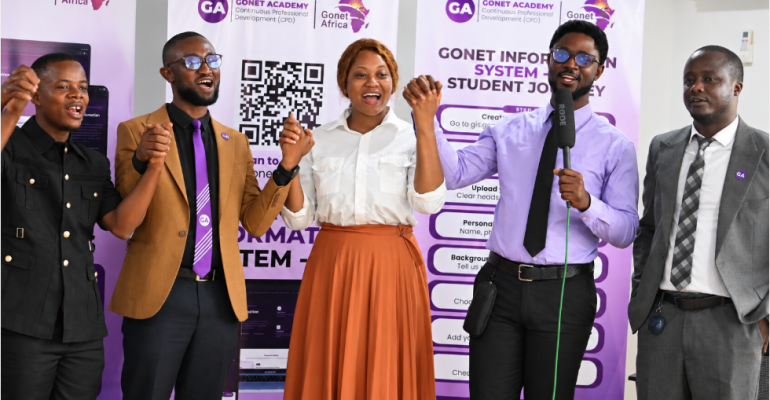
Gonet Academy has officially launched its Gonet Information System (GIS), introducing a centralized digital platform designed to make the process of applying, enrolling and navigating the Academy more convenient for prospective and existing students.
The launch, which took place on Wednesday, September 16, marked another step in Gonet Academy’s broader digital transformation and comes as the institution opens applications and enrollment for Cohort 16, with registration running from September 14 to November 7, 2026, and classes scheduled to begin on November 9.
The new system is designed to move important student processes away from fragmented, largely manual interactions and toward a more structured digital experience.
Rather than requiring prospective students to depend primarily on physical visits or repeated communication with the Academy for basic application and admission information, GIS gives applicants a central point from which to begin and follow their Gonet journey.
At its most basic level, GIS functions as a digital gateway between the prospective student and Gonet Academy.
The Academy’s published enrollment process requires applicants to create an applicant account on GIS, complete the online application and submit required information or documents, and then monitor the account and email for application updates, admission decisions and enrollment instructions.
That seemingly simple change could have significant practical implications.
For a prospective student, the process becomes easier to understand, Romeo Quoi, Gonet Academy ICT Innovator, and the brain behind the initiative noted—Create an account → select a programme → complete the application → submit required information/documents → monitor application status → receive admission/enrollment instructions → proceed into the Gonet learning experience.
The value is not simply that the process is online, It is that the student has a defined pathway, Quoi said.
For an institution serving students, graduates, working professionals, entrepreneurs and other adult learners, reducing uncertainty around administrative processes can be just as important as delivering quality instruction.

A response to the realities of modern learners
Gonet Academy’s move toward GIS reflects a broader transformation taking place across education systems globally, where students increasingly expect institutions to provide accessible digital services alongside classroom learning.
For Gonet, the need is particularly relevant because its programs serve different categories of learners—from beginners and university students to working professionals and people seeking career advancement.
The Academy currently offers three principal program pathways for Cohort 16: the Foundation Certificate Program (FCP), the Professional Diploma Program (PDP) and the Comprehensive Professional Program (CPP). The Academy says Cohort 16 offers 45 programs across areas including business, management, development, governance, marketing, communication, ICT and leadership.
The Foundation Certificate pathway is designed as a shorter, skills-focused program, while the Professional Diploma provides deeper specialization. The Comprehensive Professional Program combines certificate and diploma-level training with a capstone and graduation pathway.
For prospective students confronted with multiple programs, schedules, requirements and payment structures, a centralized information system can therefore help make the decision-making process more orderly.
How GIS navigation works
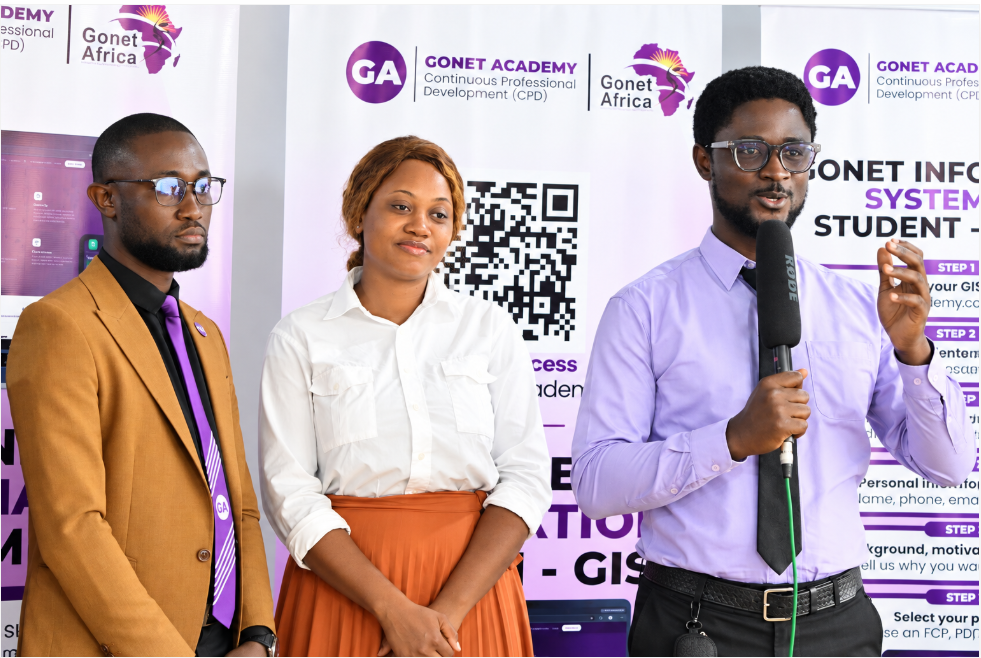
For a new applicant, the navigation process is deliberately straightforward, the ICT Innovator explained. First, create an applicant account. This establishes the student’s digital profile within the system.
Second, complete the application. The applicant provides the required information and uploads or submits the necessary documentation.
Third, monitor the application. Instead of relying entirely on physical follow-ups, applicants can return to their GIS account and check for updates, while also monitoring the email address associated with the application.
Fourth, follow admission and enrollment instructions. Once an admission decision is communicated, the student can proceed with the next steps provided by the Academy.
This process is important because the application itself becomes more than a one-time transaction. The GIS account provides an ongoing point of reference for the student’s interaction with the institution.
For students already familiar with digital platforms, this may appear routine. For others, particularly first-time applicants to professional training programs, having a clearly structured process can reduce confusion and unnecessary movement between offices.
The significance of GIS goes beyond convenience. Administrative friction can influence how students experience an institution.
Unclear application procedures, difficulty determining program requirements, uncertainty about admission status or repeated requests for the same information can create frustration before academic work even begins.
A centralized system offers the possibility of reducing those points of friction.
The platform also creates a clearer institutional record of the student’s interaction with Gonet—from application through admission and enrollment.
That can potentially improve communication between applicants and the Academy while giving students greater visibility over where they are in the process.
The Academy’s GIS contact platform also provides direct admissions and general contact channels for students who require additional assistance, reinforcing the idea that digital self-service is intended to complement—not necessarily eliminate—human support.
The GIS launch also needs to be viewed within Gonet Academy’s wider institutional development.
The Academy has recently established a Career & Alumni Development Office (CADO) to support students and graduates with career development, internships, employer connections, mentorship, entrepreneurship and alumni engagement.
Its stated objective is to bridge the gap between education and employment and continue supporting students beyond graduation.
Taken together, GIS and CADO point toward a broader institutional model in which the student relationship does not begin only when someone enters a classroom and does not necessarily end at graduation.
The digital system can provide the administrative entry point, while academic programs, career support and alumni engagement can provide the wider learning and professional-development ecosystem.
For potential students, perhaps the biggest change is psychological as much as technological.
The application process becomes something that can be started, managed and monitored, rather than something that requires uncertainty about what comes next.
A prospective student considering Project Management, Public Relations and Media Strategy, Monitoring and Evaluation, Financial Management or another professional program can begin by exploring the available pathways and then move into the formal application process through GIS.
That is particularly relevant for working professionals who may have limited time to make repeated visits to campus.
It can also benefit students outside Paynesville who need clear information before making arrangements to participate in a program.
The platform therefore has the potential to make Gonet’s services more accessible by putting essential information and application processes within reach of anyone with internet access.
The real measure will be usability
Yet the launch of a digital platform is only the beginning. The success of GIS will ultimately depend on how intuitive, reliable and responsive the system proves to be in everyday use.
Students will expect accurate information, timely updates, accessible support and a system that works consistently across devices and varying internet conditions.
Gonet will also need to ensure that students who have limited digital literacy are not excluded by the transition to digital processes.
That means maintaining clear instructions, responsive support and alternative assistance where necessary.
Digital transformation succeeds not when an institution simply introduces technology, but when the technology actually makes the user’s experience better.
The launch of the GIS comes at a significant moment for the Academy, with Cohort 16 applications now open and the institution continuing to expand its professional training offerings.
The platform effectively becomes a new digital front door to Gonet Academy, while for prospective students, it provides a clearer route into the institution. It offers, for applicants, a centralized way to follow their applications.
It provides, for the academy, a structured platform through which student interactions can be organized and managed.
And for the wider institution, it represents an opportunity to build a more connected student experience—from first inquiry and application to enrollment, learning, graduation, career development and alumni engagement.
In that sense, GIS is more than an online application tool.
It is part of Gonet Academy’s attempt to make the journey into professional education simpler, more transparent and easier to navigate—allowing students to spend less time trying to figure out the process and more time focusing on the reason they came to Gonet in the first place: to learn, grow and advance professionally.