Gonet Academy Begins Institutional Capacity Strengthening for LEC

Gonet Academy Begins Institutional Capacity Strengthening for LEC
—Targeting Stronger Governance, Leadership and Operational Performance
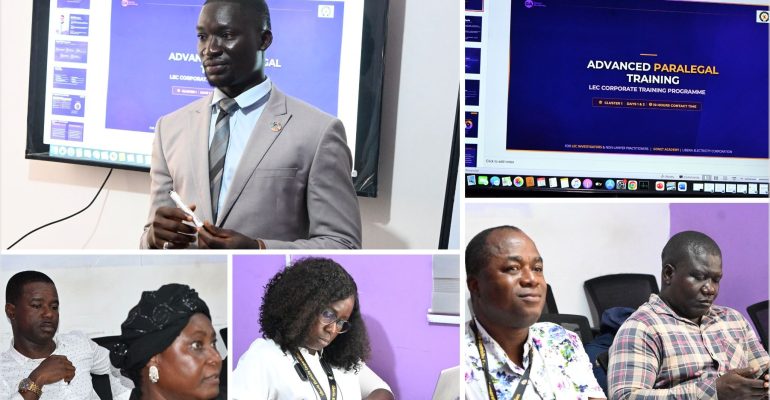
Gonet Academy has commenced an institutional capacity-building program for the Liberia Electricity Corporation (LEC), launching a structured professional development initiative designed to strengthen staff competencies in governance, legal and contract management, financial administration, procurement, leadership and workplace effectiveness.
The program, which started on Monday, October 12, 2026 covers 10 training areas for 28 participants through a coordinated, three-cluster delivery model. It represents an investment in the human and institutional capacity required to improve organizational performance at one of Liberia’s most important public utilities.
The initiative comes as LEC continues to operate in an environment where reliable electricity services, operational efficiency, financial accountability, effective procurement and public confidence are essential to national development. While infrastructure and technical investment remain important to the electricity sector, the systems, decisions and professional competencies supporting those investments are equally consequential.
The initiative, for Gonet Academy, underscores the role of professional training institutions in helping public and private organizations translate capacity-building priorities into practical workplace competencies.
The program is structured around three coordinated clusters covering 10 professional development areas.
These include Conflict Management, Advanced Paralegal Training, Advanced Contracts Management, Workplace Ethics, Administrative Office Management, Advanced Protocol and Reception Management, Strategic Leadership, Treasury Management, Business Planning and Budgeting, and the World Bank Procurement Framework.
Together, the courses address functions that influence institutional governance, compliance, resource management, workplace relationships and the quality of administrative and managerial decisions.
The significance of the training, for LEC, extends beyond the acquisition of new knowledge. Competence in contract administration can strengthen oversight of contractual obligations and help identify risks before they become costly disputes. Improved procurement knowledge can support transparent processes and compliance with applicable requirements. Stronger treasury and budgeting skills can contribute to better financial planning, reporting and resource allocation, while leadership and conflict-management training can improve coordination, accountability and workplace relations.
These competencies are particularly important for a public utility, where weaknesses in internal systems can affect expenditure, project implementation, employee performance and, ultimately, service delivery.
Gonet Academy’s capacity-building proposal identifies governance and institutional capacity, health and safety, and leadership and workforce development as interconnected priorities for organizational improvement. Although the current operational training schedule covers 10 programs, the broader proposal outlines a wider portfolio of 13 courses, reflecting additional areas that could support LEC’s future capacity-development needs.
A central feature of the program is its emphasis on practical learning and workplace application rather than relying exclusively on lectures and theoretical instruction.
According to Gonet Academy’s training framework, the delivery approach combines expert-led presentations, case studies, group discussions, peer learning, simulations, role plays, practical assignments, organizational problem-solving exercises and participant assessments.
The intention is to enable participants to connect professional standards and concepts with the situations they encounter in their respective roles.
For example, Advanced Contracts Management is designed to strengthen participants’ understanding of contract planning, drafting, review, negotiation, performance monitoring, risk identification and dispute resolution. Advanced Paralegal Training focuses on legal research, document preparation, case management and litigation support, while the World Bank Procurement Framework program is intended to connect procurement requirements with project lifecycles, contract management and fiduciary compliance.
Treasury Management emphasizes reporting, forecasting, data analysis and financial controls. Conflict Management, meanwhile, addresses negotiation, mediation, fact-finding and communication challenges that can affect working relationships and institutional decision-making.
This approach reflects the principle that the value of professional training should not be measured solely by attendance or the number of certificates issued. Its real value lies in whether participants can demonstrate improved competence and apply what they have learned to their daily responsibilities.
Gonet Academy’s stated approach emphasizes “practical, workplace-focused learning with immediate applicability.” The effectiveness of that approach will ultimately depend on the quality of facilitation, the relevance of the exercises, participants’ engagement and the extent to which LEC supports the application of new skills after the training.
The program’s supporting monitoring and evaluation framework introduces a results-oriented approach to measuring training outcomes and overall performance.
The LEC engagement builds on Gonet Academy’s broader work in professional development, organizational learning and institutional capacity strengthening.
Operating as a professional development institution of GonetAfrica, Inc., Gonet Academy provides training in areas including leadership development, project management, monitoring and evaluation, human resources management, procurement and contract management, logistics and supply chain management, occupational health, safety and environmental management, compliance and risk management, entrepreneurship and business management, tax and customs administration, financial management, office administration, digital productivity, data analysis, public relations, effective communication, strategic planning and performance management, among others.
Its institutional capacity building and training model is designed to respond to the operational requirements of partner institutions rather than deliver a uniform program irrespective of organizational needs. The approach includes institutional capacity needs assessment, customized learning content, specialist facilitators, practical exercises, participant assessment and reporting, continuous monitoring and evaluation of training outcomes, and recommendations for improvement.
Gonet Academy’s public-sector capacity-building experience also includes an engagement with the Bureau of State Enterprises (BSE), for which it conducted training on standard operating procedures in December of 2025. That engagement is an example of the Academy’s work supporting institutional systems strengthening and staff capacity enhancement within Liberia’s public sector.
In addition to its national accreditation from the Ministry of Education in November 2025, the Academy has also pursued engagement with technical and vocational education regulatory systems through the Agricultural & Industrial Training Bureau’s institutional licensing process, reflecting a wider interest in training quality, standards and institutional development.
These activities provide context for Gonet Academy’s expanding role in professional training. They should not, however, be treated as evidence of outcomes across every engagement; the longer-term measure of institutional training experience is whether programs consistently produce demonstrable improvements in staff capability and organizational practice.
The LEC program offers an opportunity to strengthen that record through systematic documentation, assessment and follow-up.
For public institutions and state-owned enterprises, professional development is closely connected to governance, public accountability, and service delivery.
Employees responsible for procurement, contracts, legal support, budgeting and administration make decisions that can influence how resources are used, how risks are managed and how effectively institutional mandates are fulfilled. Gaps in these competencies can contribute to inefficiencies, weak documentation, avoidable disputes and inconsistent procedures.
Training cannot independently resolve every organizational challenge. Its impact depends on whether institutions have clear policies, appropriate supervision, adequate resources and leadership commitment to applying improved practices. However, targeted capacity building can equip employees with the knowledge and tools required to implement existing systems more effectively and identify areas requiring institutional reform.
The LEC program therefore represents both a staff-development initiative and an opportunity to strengthen the link between individual competence, and organizational and sectoral performance.
Its significance will ultimately be determined not simply by the completion of the 10 courses, but by evidence of improved knowledge, practical capability and workplace application.
The commencement of the program creates an opportunity for Gonet Academy and LEC to establish a sustained approach to staff development, informed by performance evidence and evolving institutional priorities.
For Gonet Academy, delivering the current program effectively will be important to demonstrating how customized professional training can support the performance of a national utility and strengthen institutional capacity within Liberia.
For LEC, the opportunity is to ensure that the knowledge acquired in training is reinforced through supervision, workplace assignments, improved procedures and follow-up assessment.
As the program progresses, its most important achievement will not be the number of sessions conducted, but the extent to which participants return to their departments better equipped to manage responsibilities, solve problems, uphold professional standards and contribute to the Corporation’s operational and strategic objectives.
The commencement of the training marks an important step in that process. Its lasting significance will depend on the partnership between the Gonet Academy and LEC—and on the commitment to turn professional learning into measurable workplace improvement.